You have probably heard the promises before. "AI will handle everything for you." "Your personal AI assistant is here." And yet, every time you tried one, it felt like a fancy chatbot that could write emails but could not actually do anything in the real world.
That may have finally changed.
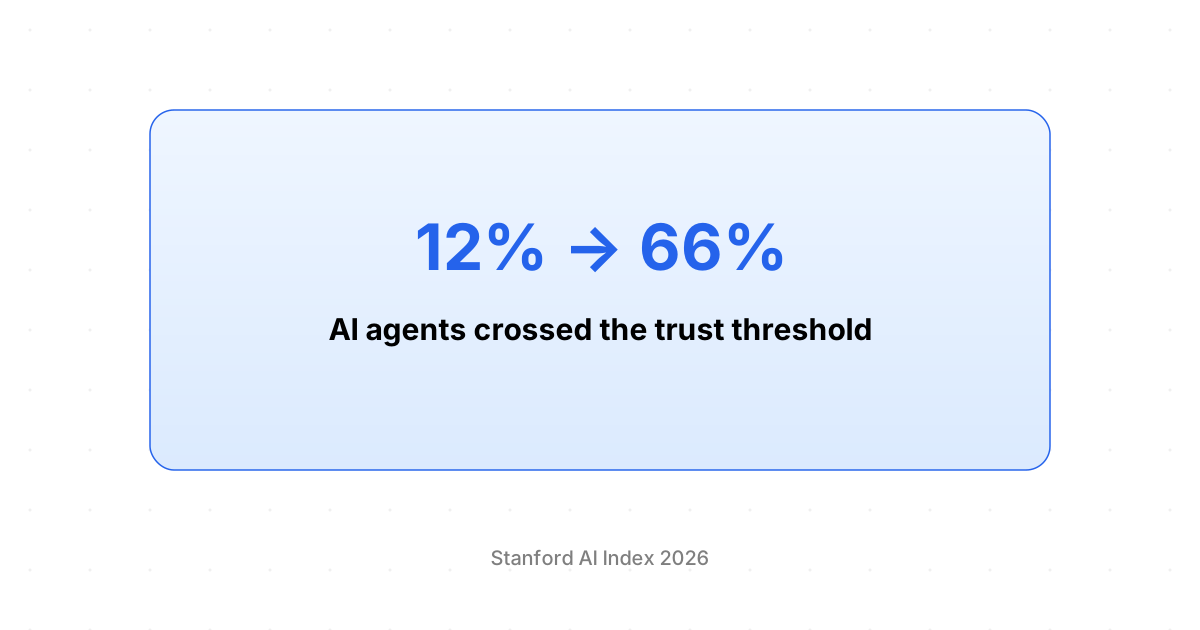
Stanford's 2026 AI Index just dropped a number that stopped people in their tracks: AI agents now complete 66% of real-world computer tasks at human level. Last year, that figure was 12%. That is not incremental improvement. That is a fivefold leap in a single year.
So the question is not whether AI agents are getting better. The question is whether they are good enough for you to actually trust with something that matters.
What the Stanford AI Index Actually Found
The Stanford Human-Centered AI Institute publishes an annual report that tracks the state of artificial intelligence across research, industry, and policy. The 2026 edition, released in late April, contained some of the most striking data points about AI agents we have seen.
The headline finding: on standardized benchmarks that measure how well an AI system can navigate software, complete multi-step tasks, and interact with digital tools, AI agents went from a 12% success rate in 2025 to 66% in 2026. For context, human performance on the same benchmarks is around 78%.
That gap, 66% versus 78%, is closer than most experts predicted we would be by now. Some specific task categories showed even more impressive results. Data entry, scheduling, web research, and form completion all saw AI agents performing at or above human baseline.
But here is the catch. These benchmarks measure digital tasks inside a computer. They do not measure whether an AI agent can call your doctor's office, navigate a phone menu, wait on hold for 20 minutes, and book an appointment. That is a different kind of test entirely, and it is the one that actually matters for most people.
Let Assindo answer your calls and make them for you.
Get AssindoThe Trust Gap: Benchmarks vs Real Life
There is a big difference between passing a benchmark and handling your Tuesday afternoon. AI agents can now fill out forms, draft emails, and search the web effectively. But when you ask one to interact with the physical world, things get complicated fast.
Consider what a typical professional needs help with on any given day:
- Phone calls. Calling the insurance company to dispute a charge. Making a restaurant reservation. Following up with a contractor. These involve navigating IVR phone menus, waiting on hold, understanding a human on the other end, and responding naturally. Most AI assistants still cannot do this.
- Scheduling across platforms. Coordinating a meeting between three people using three different calendar systems. An AI agent needs to understand context, preferences, and handle back-and-forth negotiation.
- Research with follow-through. Not just searching the web, but calling stores to check inventory, comparing prices, and actually placing an order.
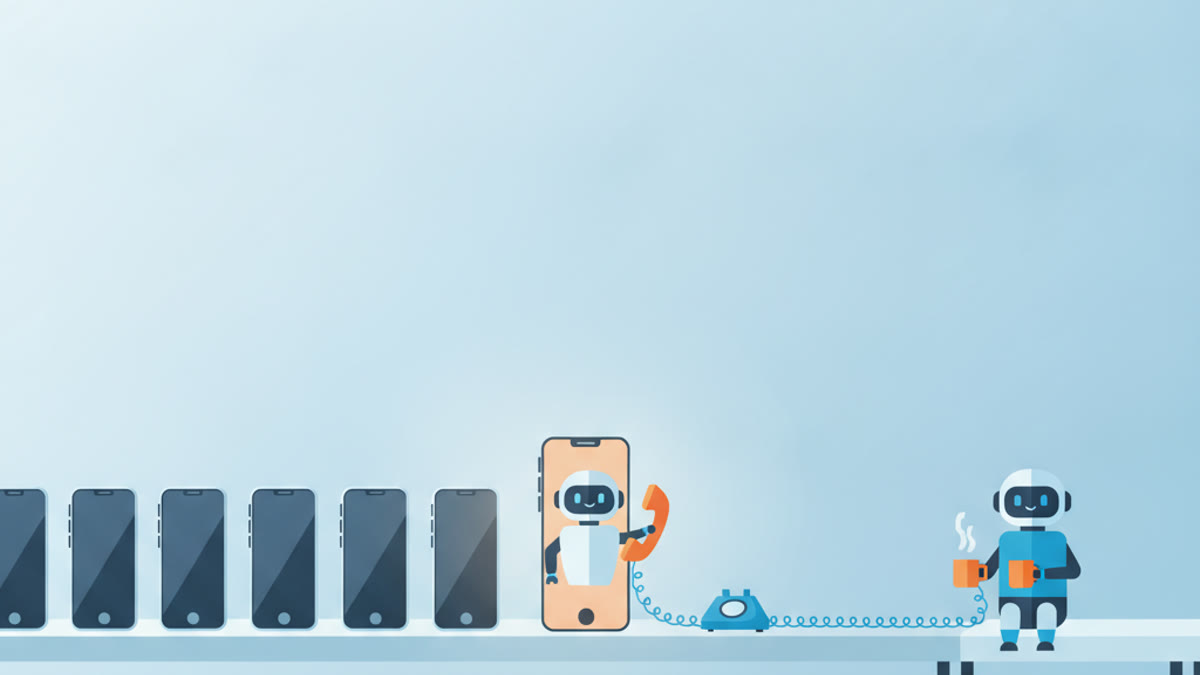
The AI agent landscape in 2026 is split between tools that are very good at digital tasks and a small handful that can reach into the real world. The majority of popular AI assistants, including ChatGPT and Google Gemini, are excellent at text, code, and image generation. They live inside your screen. They cannot pick up a phone.
Why 2026 Feels Different From Every Other "AI Breakthrough" Year
You would be forgiven for being skeptical. The tech industry has cried "this changes everything" so many times that the phrase has lost all meaning. But there are concrete reasons why 2026 is genuinely different for AI agents.
First, the multi-modal leap is real. AI agents can now process text, voice, and visual input simultaneously. This is not a minor upgrade. It is what allows an AI assistant to listen to a phone call, understand speech, and respond in real time.
Second, tool use has matured. Earlier AI agents could suggest actions. Current ones can execute them. The difference between "here is a script for your phone call" and "I will make the call for you" is enormous.
Third, reliability has improved enough for everyday use. A 66% success rate on complex tasks does not sound like much until you realize that humans also fail at tasks sometimes. We just have a higher tolerance for our own mistakes than for machine ones. For repetitive, well-defined tasks like making phone calls and scheduling, modern AI agents are reliable enough to be genuinely useful.
Fourth, the price has dropped to consumer levels. You no longer need an enterprise budget to deploy an AI agent. Services like Assindo offer real-world AI agent capabilities starting at prices accessible to individual professionals and small businesses.
What an AI Agent Can Actually Do For You Right Now
Let us get specific. Here is what a capable AI agent can handle today, not in theory, but in practice:
Phone Calls
This is the capability that separates real AI agents from digital-only assistants. An AI agent like Assindo can make outbound phone calls on your behalf. It navigates automated phone menus, waits on hold, speaks naturally with human representatives, and reports back to you with the outcome.
Real-world examples include calling your internet provider to negotiate a better rate, contacting a doctor's office to reschedule an appointment, or checking availability at a popular restaurant during peak hours. The AI agent handles the entire interaction while you focus on something else.
Call Screening and Answering
On the incoming side, an AI agent can answer your phone, screen calls, and handle basic interactions. Spam calls get filtered out. Legitimate callers get a professional response. Important calls get forwarded to you with context.
This is especially valuable for small business owners, freelancers, and anyone who gets a high volume of phone calls but cannot always answer personally.
Web Search and Research
All major AI agents can search the web, but the best ones go beyond basic queries. They can synthesize information from multiple sources, compare options, and present findings in a format you can act on.
Task Scheduling and Management
An AI agent can maintain your calendar, set reminders, and even proactively suggest scheduling optimizations. Combined with phone call capability, this means your AI agent can not only put appointments on your calendar but actually make the calls to set them up.
How to Choose an AI Agent in 2026
With AI agents proliferating rapidly, here is a practical framework for evaluating which one is right for you:
1. Does it work in the real world or only on your screen? If an AI assistant can only generate text and images, it is a chatbot with better marketing. The most valuable AI agents in 2026 are the ones that can take action beyond your device: make phone calls, schedule appointments, interact with services on your behalf.
2. Can you trust it with sensitive tasks? Making a phone call to your bank involves sharing personal information. Your AI agent needs to handle that responsibly. Look for services with clear privacy policies, data encryption, and a track record of security.
3. Does it require technical setup? Some AI agents require you to host servers, configure APIs, or write code. Others work out of the box with a simple app download. If you are a developer, the former might appeal. If you are a busy professional or parent, the latter is the only viable option.
4. Is the pricing predictable? Many AI services charge per token, per call, or per task. This can lead to unpredictable monthly bills. Look for flat-rate pricing that lets you use the service as much as you need without surprises.
5. What do real users say? Check independent reviews. G2's 2026 analysis of 770 verified reviews found that while AI agent technology delivers value, "the path to value can be muddy." User reviews reveal the gap between marketing claims and actual daily experience.
The Honest Assessment
AI agents in 2026 are not perfect. They still stumble on unusual requests, complex negotiations, and tasks that require deep contextual understanding of a specific person's preferences. If you expect an AI agent to replace a human executive assistant who has worked with you for five years, you will be disappointed.
But if you expect an AI agent to handle the repetitive, time-consuming tasks that eat up your day, things like waiting on hold, making routine phone calls, screening incoming calls, and managing your schedule, you will be pleasantly surprised.
The Stanford data confirms what early adopters already know: AI agents have crossed the threshold from "interesting experiment" to "genuinely useful tool." The 66% benchmark number is not just a research stat. It represents a real shift in what you can offload to an AI agent and trust that it will get done.
The real question now is not whether AI agents are ready. It is whether you are ready to start using one.
Stop Waiting on Hold. Let an AI Agent Handle Your Calls.
Assindo makes real phone calls, screens incoming calls, books appointments, and manages your schedule. No setup required.