You probably heard the news. On April 8, 2026, Visa launched Intelligent Commerce Connect, a platform that lets AI agents discover products, choose what to buy, and complete payments using your card. It is not a prototype or a press release with vague promises. Pilot partners including AWS, Highnote, and others are already processing real transactions through AI agents right now.
This is the moment AI agent shopping went from science fiction to checkout button. And it raises a bigger question: if an AI agent can buy things for you, what else should it be doing?
Why AI Agent Shopping Matters in 2026
For the past two years, most AI assistants have been digital-only companions. They can draft emails, summarize documents, and answer questions. Useful, but confined to your screen. The real world - phone calls, appointments, purchases - still required your direct involvement.
Visa's move signals a shift. The infrastructure now exists for AI agents to act on your behalf in the financial world. Tokenization keeps your actual card number hidden. Spend controls let you set limits. Fraud detection monitors agent transactions the same way it monitors human ones.
The implications go beyond buying sneakers online. If an AI agent can complete a purchase, it can handle the entire shopping workflow: research, compare prices, place the order, track shipping, and even handle returns. That is hours of mental overhead removed from your week.
What AI Agent Shopping Actually Looks Like
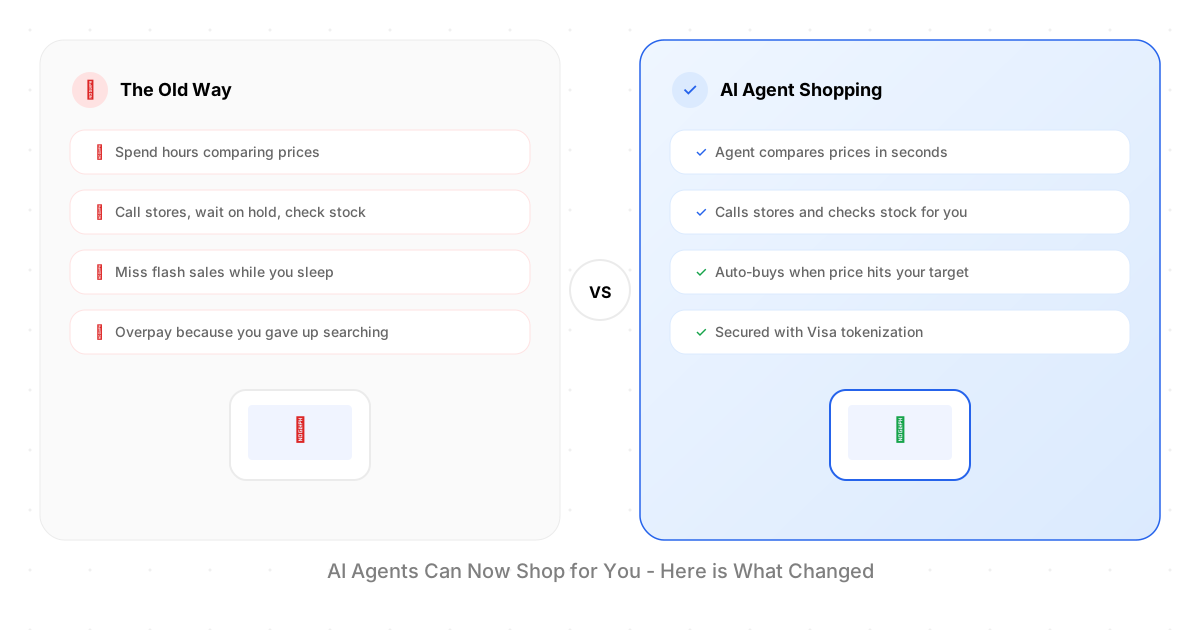
Let's say your refrigerator breaks. In 2025, you would spend an evening reading reviews, comparing prices across three stores, calling the appliance shop to check availability, and finally placing the order. In 2026, an AI agent can do all of that.
Here is what the workflow looks like with a capable AI agent:
1. You tell the agent your refrigerator broke and mention your budget 2. The agent searches for top-rated models in your price range 3. It calls local stores to check availability and delivery windows 4. It compares prices across retailers and identifies the best deal 5. It presents you with a recommendation and, with your approval, places the order 6. It tracks the shipment and notifies you when delivery is scheduled
Notice step 3. The agent calls stores. That is the part most AI assistants still cannot do, and it is the part that actually saves you the most time. ChatGPT can write a great comparison table, but it cannot pick up the phone and ask Best Buy if they have that Samsung model in stock.
The Gap Between Chatting and Doing
This is the real divide in the AI assistant landscape in 2026. There are AI tools that live inside your browser, and there are AI agents that operate in the real world. The gap between them is significant.
Browser-based AI assistants like ChatGPT, Gemini, and Claude are excellent at generating content, analyzing data, and answering questions. They are essentially very smart research assistants. But when it comes to taking action - making a phone call, navigating an IVR menu, waiting on hold, speaking to a human - they hit a wall.
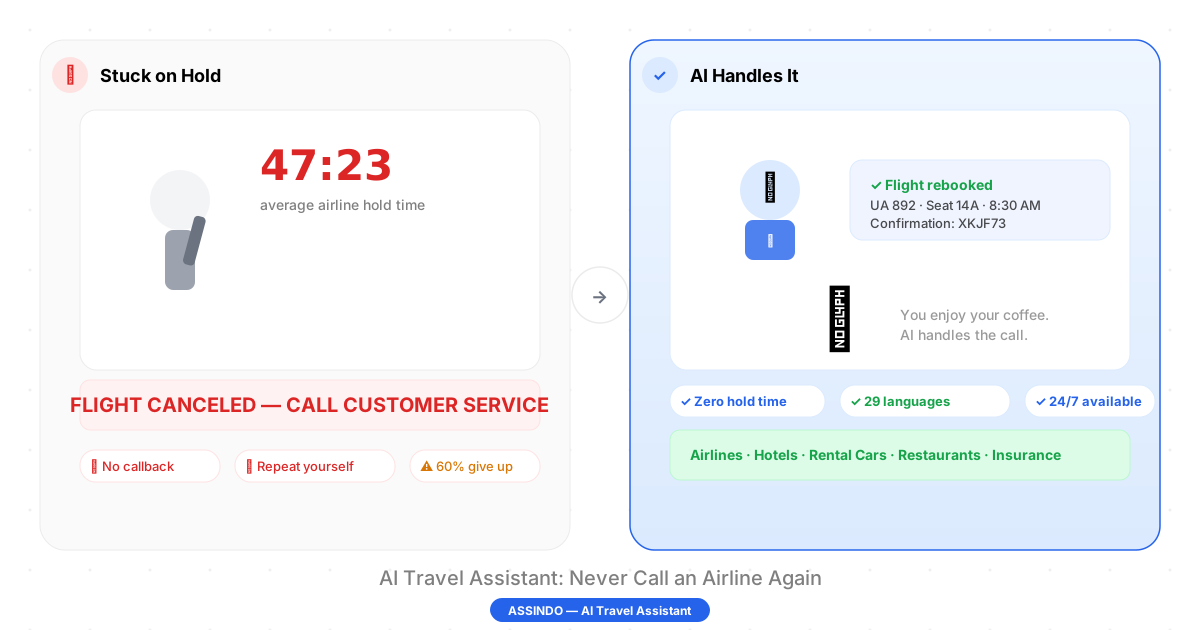
Real-world AI agents fill that gap. An AI agent like Assindo can actually make phone calls on your behalf. It navigates phone trees, waits on hold so you do not have to, and speaks to customer service representatives. Combined with the new commerce infrastructure from Visa, you get an agent that can both research and execute.
Think of it this way: Visa built the wallet. Assindo built the hands that reach into it.
How Visa Intelligent Commerce Connect Works
Understanding the mechanics helps you decide when to trust an AI agent with your money. Here is how Visa's platform handles AI agent shopping:
Tokenized payments. Your actual card number is never shared with the AI agent or the merchant. Instead, Visa generates a unique token for each transaction. If a token is compromised, it can be revoked without affecting your card.
Spend controls. You set limits on what the agent can spend. Daily caps, per-transaction limits, and merchant category restrictions give you granular control. The agent literally cannot exceed the boundaries you define.
Fraud monitoring. Visa's existing fraud detection network monitors agent transactions in real time. Unusual patterns trigger the same alerts and protections as human-initiated purchases.
Multi-network support. Unlike you might expect, the platform works across card networks, not just Visa. This means your AI agent is not limited to a single payment ecosystem.
The pilot is running with select partners now, with broader availability expected throughout 2026. If you use a supported bank or fintech app, you may see AI agent payment options appear in your settings soon.
Real-World Scenarios Where AI Agents Save You Money
AI agent shopping is not just about convenience. In several scenarios, an active AI agent can actually save you money:
Price monitoring and automated purchasing. Tell your agent to buy a specific TV when the price drops below $600. It watches pricing across retailers and executes the purchase the moment the threshold is hit. No more missing flash sales.
Subscription management. Your agent calls your internet provider, negotiates a better rate using competitor pricing as leverage, and either secures the discount or schedules the switch. People who do this manually save an average of $30 per month according to consumer reports. An AI agent makes it effortless.
Insurance shopping. Instead of spending a Saturday getting quotes, your agent calls five insurance companies, provides your information, collects quotes, and presents you with a comparison. It can even handle the policy switch paperwork.
Travel booking. Your agent searches for flights, calls the hotel to request a room upgrade, and books the best combination. It monitors prices after booking and rebooks if prices drop within the cancellation window.
All of these scenarios require an AI agent that can make phone calls, not just browse websites. That is the critical difference between a digital assistant and a real-world AI agent.
What to Look for in an AI Agent in 2026
With Visa opening the door to agent-driven commerce, expect a flood of "AI agent" products in the coming months. Not all of them will be equal. Here is what to evaluate:
Real-world action capability. Can the agent actually do things for you, or does it just generate text? Making phone calls, scheduling appointments, and completing purchases are the actions that save real time.
Security and transparency. Does the agent show you what it is doing before it does it? You should be able to review and approve actions, especially financial ones. No agent should spend your money without your explicit consent.
Ease of setup. If the agent requires you to host it on a server, configure APIs, or manage infrastructure, it is built for developers, not for you. The best AI agents work out of the box with no technical knowledge required.
Cross-platform availability. Your agent should work on your phone, tablet, and computer. It should be available wherever you are, not locked to a single device.
Natural language interaction. You should be able to tell your agent what you need in plain English, not through menus or command syntax. "Find me the best deal on a standing desk under $400" should be all it takes.
The Bigger Picture: 2026 is the Year of the Active Agent
Visa's announcement is part of a larger trend. Throughout early 2026, we have seen major companies build infrastructure for AI agents that act rather than just chat:
- Adobe released its Firefly AI Assistant for creative workflows
- The Agentic AI Foundation hosted the MCP Dev Summit, bringing together developers building production-ready agents
- Multiple fintech companies are racing to offer agent-friendly payment rails
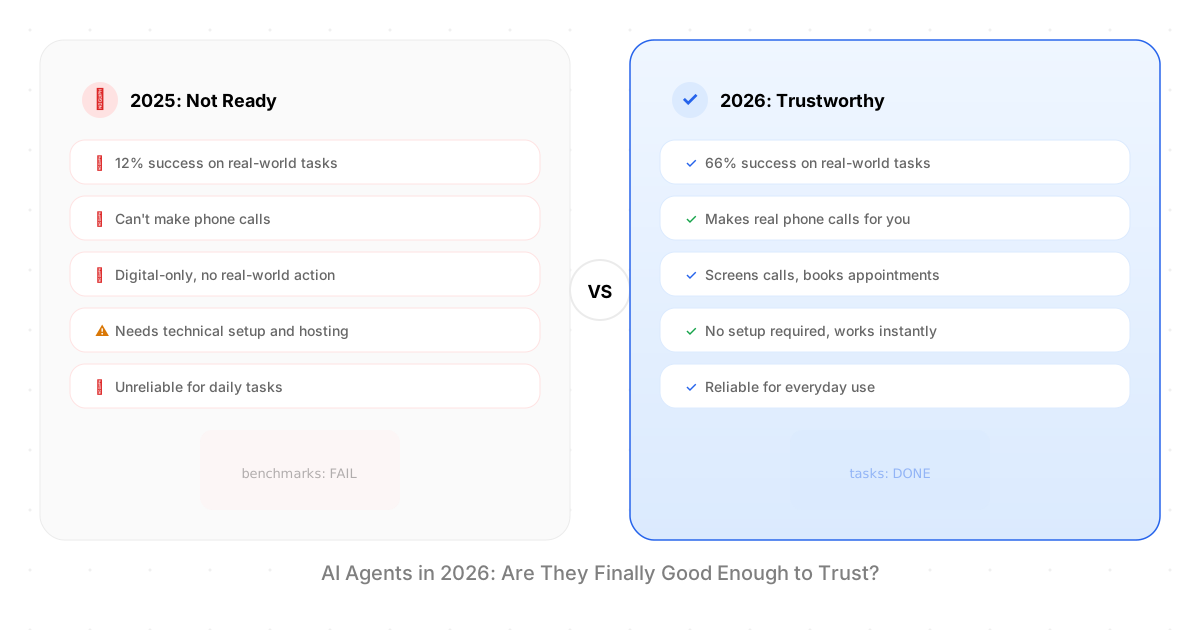
The pattern is clear. 2025 was the year we talked to AI. 2026 is the year AI acts for us.
For consumers, this is fantastic news. The technology is maturing, the infrastructure is being built, and the use cases are expanding rapidly. But you do not need to wait for every piece to be in place. AI agents that handle phone calls, scheduling, and web research are already here and already saving people hours every week.
Getting Started With a Real-World AI Agent
If the idea of an AI agent that shops, calls, and handles tasks for you sounds appealing, you can start today. You do not need to wait for Visa's full rollout or learn to code.
Assindo is an AI agent that works in the real world right now. It makes phone calls on your behalf, navigates IVR menus, waits on hold, screens incoming calls, searches the web, posts to social media, and manages your schedule. No setup required. You download the app, describe what you need, and it gets to work.
Whether you want to compare insurance quotes, check if a store has an item in stock, or let an agent handle the calls you keep putting off, Assindo handles the real-world tasks that other AI assistants cannot touch.
As AI agent shopping becomes mainstream through platforms like Visa's, having an agent that can both research and act will become even more valuable. The agents that win will be the ones that meet you where the real world happens - on the phone, in your schedule, at the store.
Ready to Delegate the Real World to AI?
Stop spending hours on phone calls, hold times, and tasks an AI agent can handle for you.